Private infrastructure for mobilising and monitoring capital for West African SMEs.
From spark to capital: structure, raise, invest.
Structure the company, mobilise the right capital, monitor the investment: one integrated system, from first analysis to reporting, across the eight WAEMU countries.
Free first conversation · Reply within 5 business days · No funds pass through SPARKS PROJECT
Start by knowing where you stand4
services, from financing to investment monitoring
150
million FCFA: the threshold of our financing transactions
8
countries across the WAEMU zone
0
FCFA of your funds on our accounts: the money goes straight to the company
A complete capital cycle
Four questions. Four answers.
Each service answers one precise question. You come in through yours — and from one deal to the next, the cycle comes full circle.
For companies
They work with us
Financing 150+
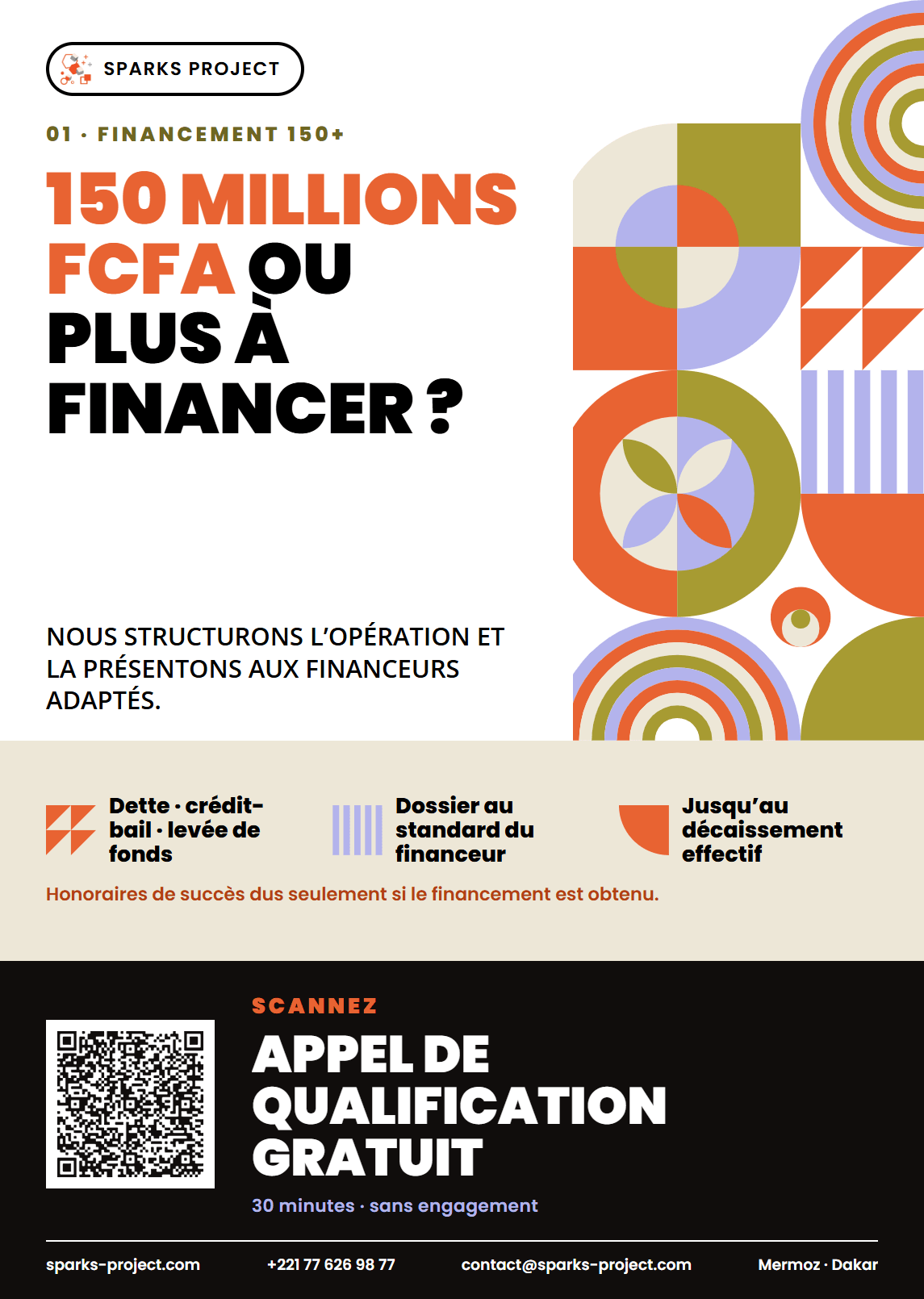
Looking for 150M FCFA or more?
The problem is not always the amount available on the market: it is often how the transaction is structured. We identify the right instrument, build the transaction around your real repayment capacity, and present it to the right financiers — all the way to disbursement.
Instruments
- Bank debt
- Leasing
- Sale-and-leaseback
- Contract pre-financing
- Fundraising
We structure your transaction and present it to the right financiers. The decision to finance always rests with the financier.
The path
- 1Diagnostic
- 2Structuring
- 3Financiers
- 4Negotiation
- 5Disbursement
Our model
Creditable diagnostic, then a success fee depending on the instrument
Test yourself
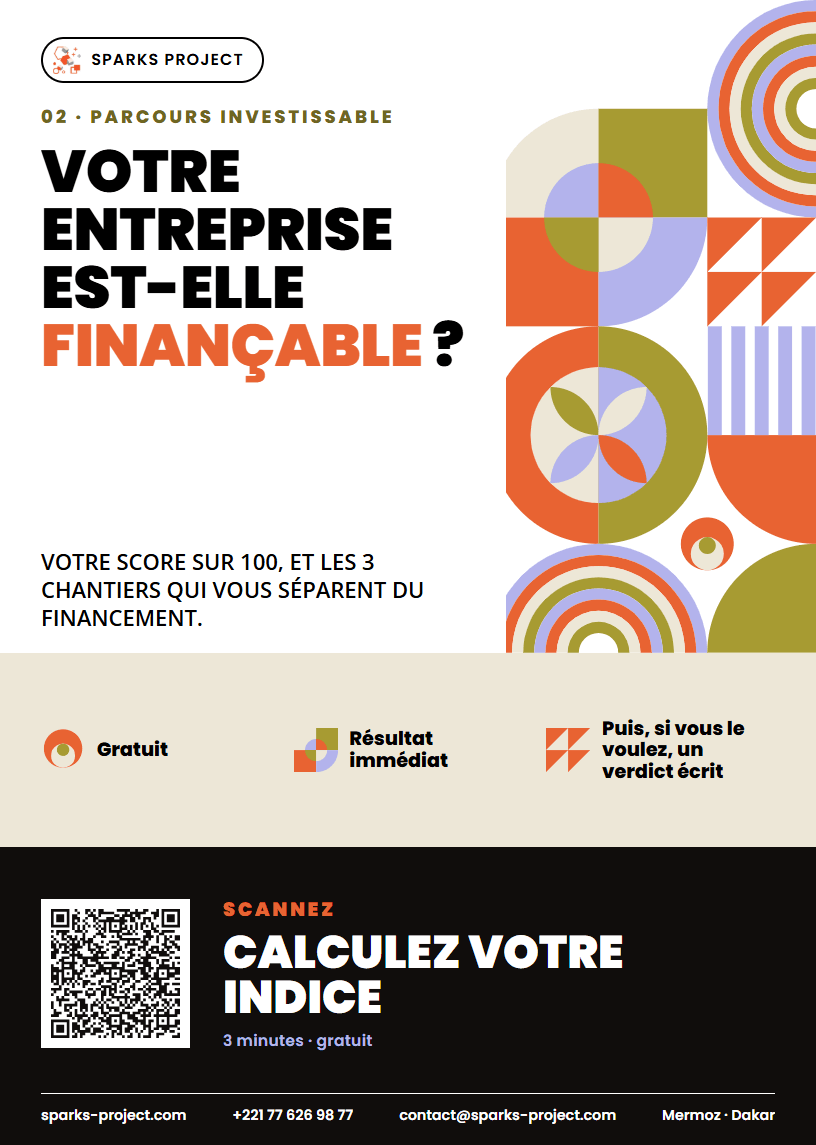
Is your project financeable?
Three questions for a first signal. Then carry on with the full assessment — fifteen questions, five dimensions, a written action plan — without starting over.
Free · no sign-up
Question 1 of 3
Is your company registered (trade register, tax ID)?
What we know how to assess
We don’t cover everything. We cover the value chains where we can read a trading account, check a stock and talk to the equipment supplier.
Our conviction
A company is not financed because it is good. It is financed because it can be read. Our entire business sits in that gap: measuring it, closing it, then presenting the company to the capital that fits.
Opportunity room
Opportunities open right now
Each one has been analysed on site. The level of verification is written on the card: it is how far we went.
No opportunity is open at the moment. Present your investor profile and you will be told at the next opening.
Present my investor profile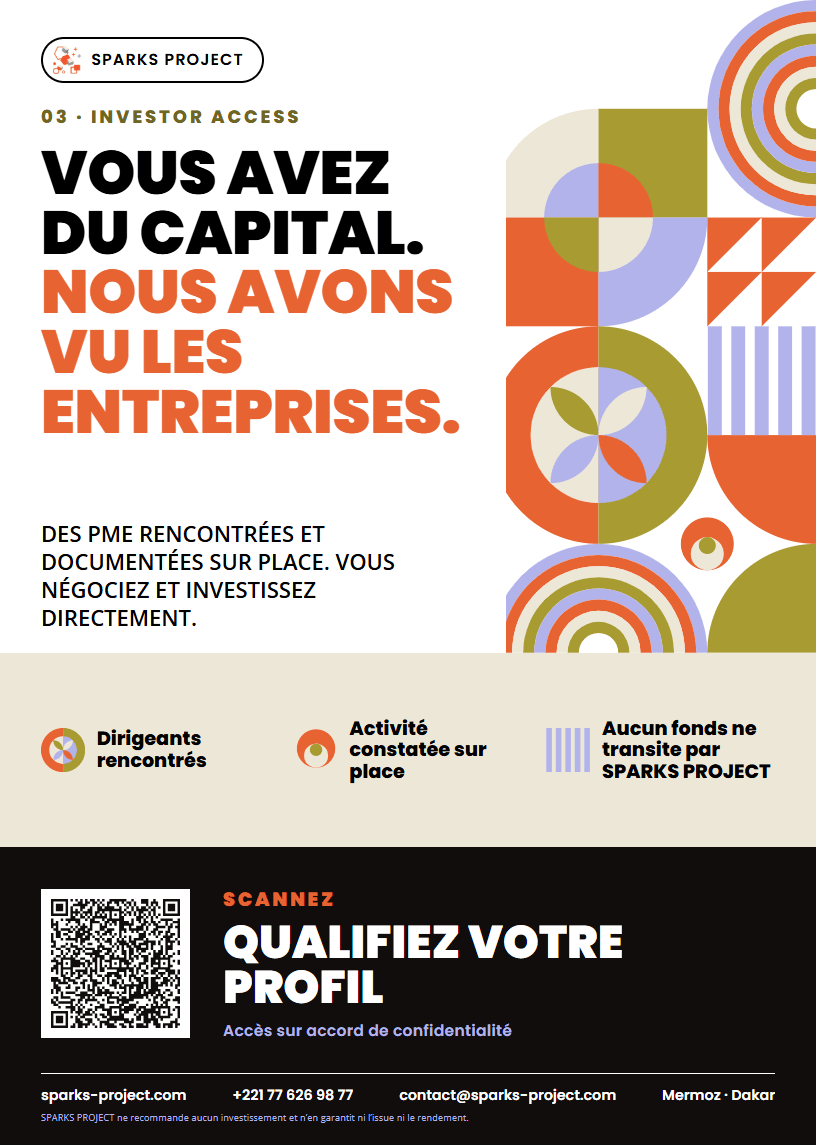
Investment Monitoring
You have invested. Don’t lose sight of your investment.
An investment is not secured at signature alone: the real difficulty often starts after closing. We track the accounts, we go on site and we alert you — whether you are in Dakar, Paris or Abidjan.
- Accounts
- Field
- Reporting
- Alerts
12-month commitment. No funds pass through SPARKS PROJECT.
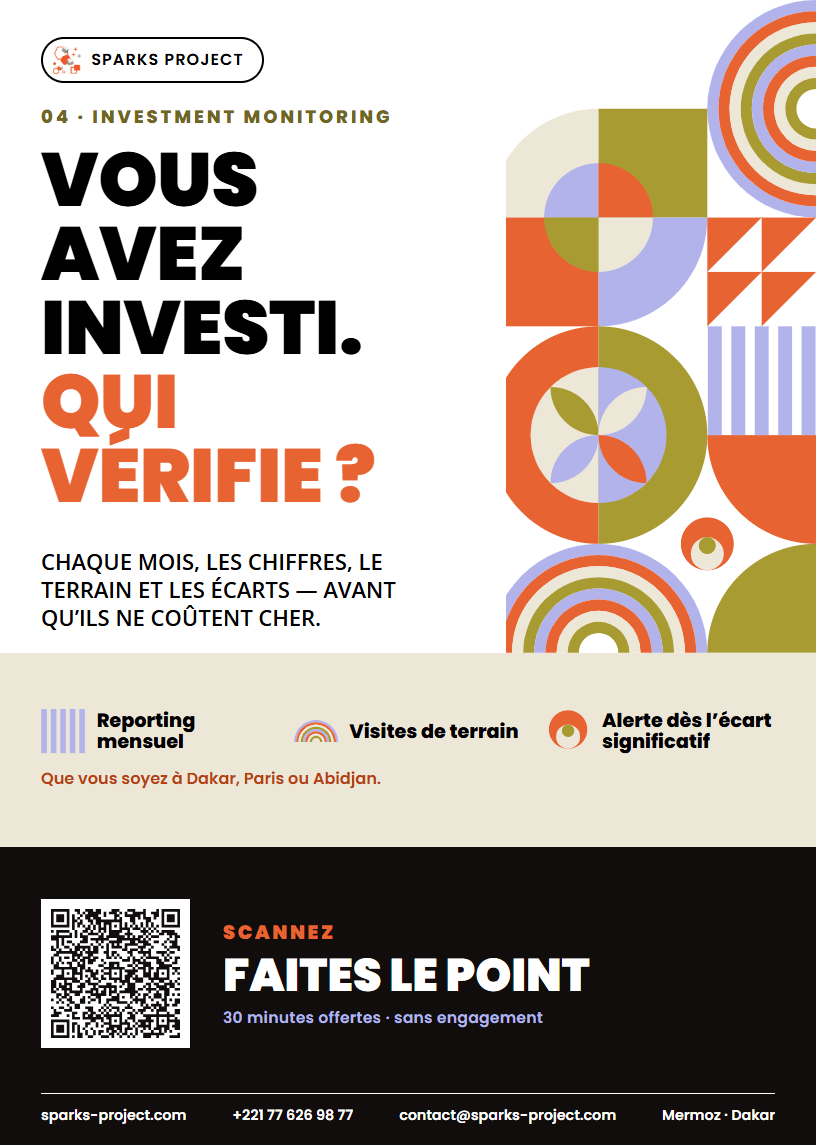
01 · Essential
Monthly financial reporting, document tracking and alerts on material deviations.
02 · Enhanced
Essential, plus a documented site visit every quarter.
03 · Participation
Enhanced, plus attendance at governance bodies under mandate.
SPARKS PROJECT in pictures
The field, the meetings, the transactions: the tangible side of our mandates.
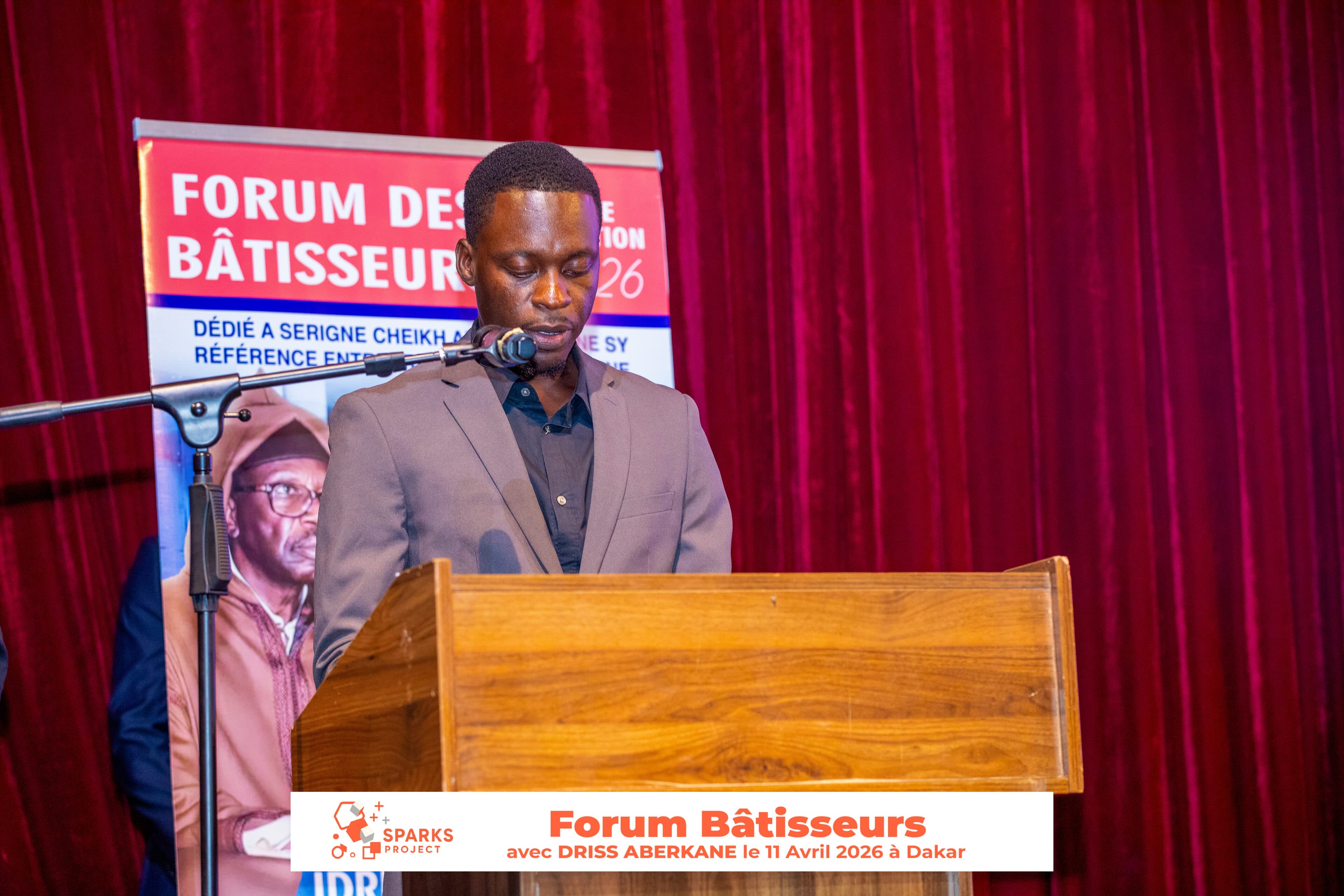
Le terrain d’abord
Intervention lors du Forum des Bâtisseurs - Avril 2026
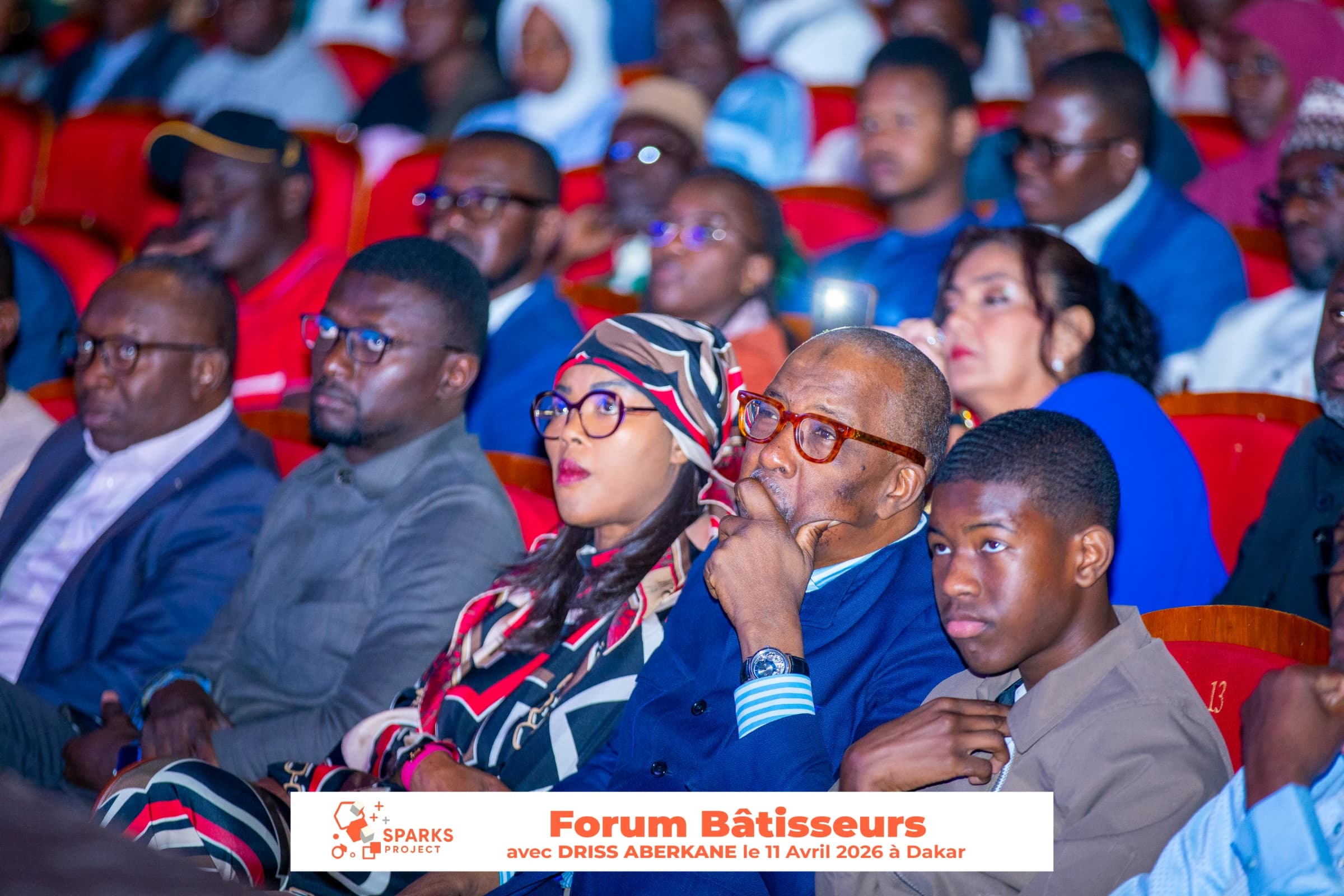
Rencontres investisseurs
Forum des Bâtisseurs - Pour davantage de Financements destinés à l’économie réelle
Newsletter
Real Markets Insider
Our letter on real-economy investment in West Africa: sector analysis, signals from the ground, transactions decoded.
Straight questions, straight answers
The questions we actually get asked — and the ones people don’t always dare to ask.
Does SPARKS PROJECT receive or manage funds?
No. No funds pass through SPARKS PROJECT: we never receive an investor’s or a financier’s money, and we manage no capital on behalf of third parties. We structure transactions, arrange introductions and assist with analysis and negotiation; the investment is made directly between the parties.
How much do your services cost?
We do not publish a price list: our fees depend on the transaction and what it requires. After a free first conversation, we send you a written proposal — what is due, for what and when — which is then restated in the mandate. The principle does not change: on financing and on access to opportunities, part of our fee is due only on success. And the first step costs nothing: the Financeability Index, online, in three minutes.
Do you guarantee that I will get financing?
No — and no one honestly can. The decision to finance always rests with the financier. We commit to what depends on us: structuring your transaction, presenting it to the right financiers and defending it through negotiation. That is why part of our fee is due only on success.
My need is below 150M FCFA. Can you help?
Yes, through the Structuring & access to capital path. It starts with a financeability diagnostic, which concludes plainly: financeable, to be structured, or not a priority. We are selective — it is for companies that already have traction, a market and capable directors, and lack the structure.
My company isn’t formalised yet. Is that a reason to turn me down?
Not in itself. Formalisation is one of the corrections the Investable path carries out. What matters is the real business: customers, a market, potential. Start with the Financeability Index: it will tell you precisely where you stand.
How do you select the opportunities presented to investors?
We do not present a business plan: we set out to understand the real company. We meet the directors, observe the activity on site, check the documents, and obtain their written consent before any presentation. On the investor side, we first qualify your profile and have a confidentiality agreement signed; due diligence is then suited to the ticket and the risk.
I live abroad. How do I keep track of an investment made back home?
That is what the Investment monitoring & protection service is for: we track the accounts and the cash, we go on site, and we send you reporting that names deviations from plan. A material deviation is flagged to you without delay, with a recommendation. Your investments are local; your monitoring can be professional.
How long does it take to finance a transaction?
It depends on the instrument: a few weeks for pre-financing backed by an awarded contract, three to nine months for structured debt or a fundraise. If the company must first be structured, add the time of the transformation plan, which the diagnostic costs. Anyone promising faster is setting you up for disappointment.
What projects do you turn down?
The Services page carries a section titled “What we do not support”, with its reasons. In short: import trading without local processing, residential real estate, projects whose activity cannot be observed on site, and any request to manage funds on behalf of third parties or conditioned on a guaranteed outcome.
How is the confidentiality of my file protected?
Your information is read only by our team and never passed to a third party without your written consent. Sensitive documents do not travel through the public forms. Opportunities open only to qualified investors, under a confidentiality agreement, and every access is logged.
What is your question?
A free, no-commitment thirty-minute conversation is enough to know whether we can help — and which service to start with.